Doorway pages
Black hat. Against Google’s spam policies. Risks a manual action or a ranking drop. White, grey and black hat SEO compared
What are doorway pages?
Doorway pages are sites or pages created to rank for specific, similar search queries and send visitors to one main destination, without offering real value themselves. Google’s doorway abuse policy covers them, and they are one of the patterns behind the “thin content” manual action.
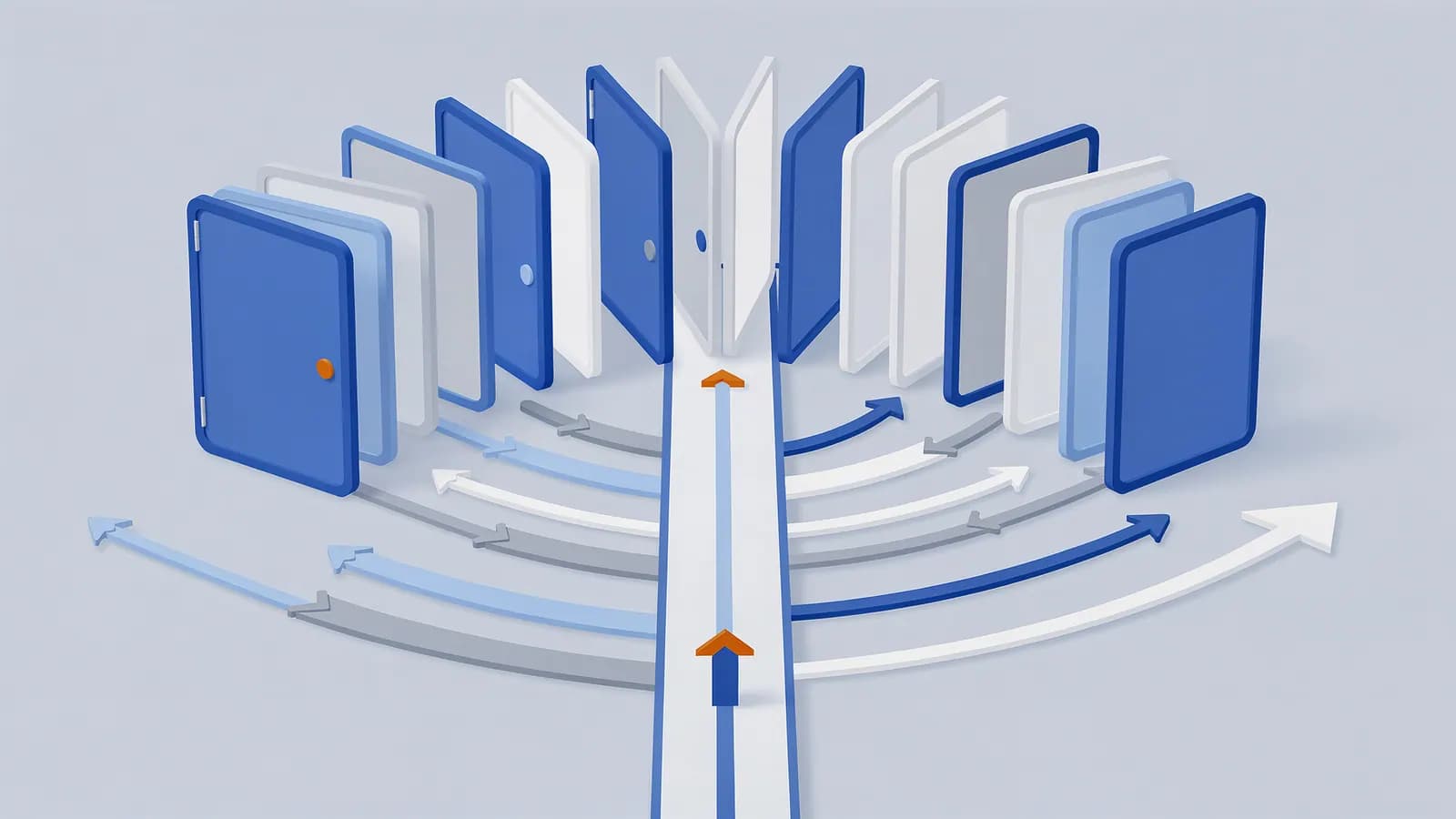
Google’s examples include having many domain names or pages targeted at specific regions or cities that funnel users to one page, pages generated to funnel visitors to the usable part of a site, and substantially similar pages that sit closer to search results than to a clear, browsable structure.
The classic modern doorway is a set of city pages, “Plumber in Leeds”, “Plumber in York”, “Plumber in Hull”, with the same text and only the city name swapped.
Why doorway pages matter for SEO
Location and service pages are a normal part of local SEO, so it is easy to slide into doorways when you scale them up. The difference is whether each page has something genuinely its own.
The white hat alternative is local landing pages done properly: one page per real location or service area, with local details, staff, photos, reviews, prices, and the case studies or information that actually differ. Programmatic SEO can be fine too, when each page is built on unique, useful data.
Risks of doorway pages
- A “Thin content with little or no added value” manual action, which covers doorways.
- Algorithmic demotion of the templated pages, and sometimes the wider site.
- Index bloat and wasted crawl budget on hundreds of near-identical URLs.
- Poor experience and lost trust when visitors land on a page that just pushes them elsewhere.
How to spot and fix doorway pages
- List your location and variant pages and compare their text. If most of it is the same with one word swapped, they are doorways.
- Ask whether each page would be useful to someone who landed on it directly, and whether you actually serve that place.
- Merge pages that have nothing unique into one stronger page, and 301 redirect the old URLs.
- Rebuild the pages you keep with local content: address, area served, local projects, reviews, opening hours, directions.
- Link them into a clear, browsable structure rather than leaving them as orphan pages for search only.
Doorway pages example
/plumber-leeds, /plumber-york, /plumber-hull, /plumber-bradford… 200 pages, each saying “Looking for a plumber in [city]? We are the best plumbers in [city]. Call now.” with the same body text, no local address and a button to the same contact page.
Doorway pages FAQ
Are location pages doorway pages?
Not if each one has unique, useful content about a place you really serve. They become doorways when they are templated copies with only the city name changed.
How many location pages is too many?
There is no number. It depends on whether you have something specific to say about each place and whether you actually operate there.
Related SEO terms
Local landing pages are pages on your site for a specific location or service area, giving local details customers and search engines need.
Thin content is a page with little or no useful content of its own, such as near-empty pages, copied text or doorway pages.
Duplicate content is the same or very similar content available at more than one URL, on one site or across sites. Google picks one version to show.
Programmatic SEO is creating many pages from templates and data to target large sets of similar searches, such as “X in [city]” queries.
Scaled content abuseBlack hat
Scaled content abuse is producing many pages mainly to manipulate rankings, with little value for users, whether made by AI, people or both.
Black hat SEOBlack hat
Black hat SEO is the use of tactics that break search engines’ spam policies, such as paid links, cloaking or keyword stuffing, to rank faster.